
How to Calculate Sales Tax (Free Calculator + Formula)
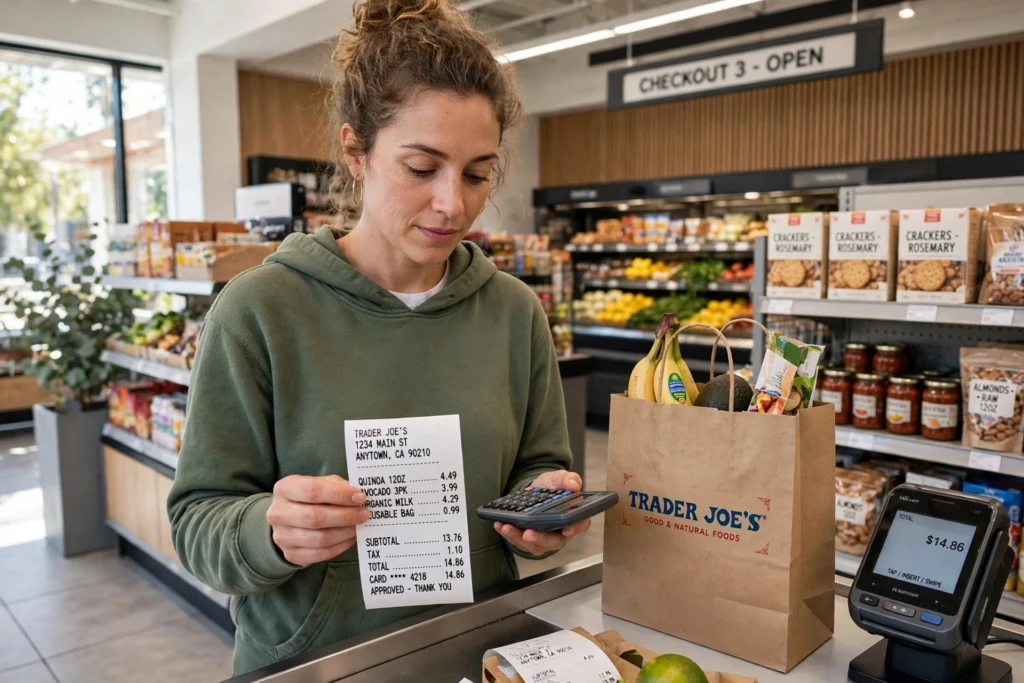
You know that moment at the checkout when the total on the screen is higher than the price on the tag? You pick up a $50 shirt, expect to pay $50, and somehow the register asks for $54.13. That extra bit is sales tax — and once you know how to calculate sales tax yourself, the number on the screen stops being a surprise.
Here’s the good news: the math is simple. You don’t need a finance degree, and you don’t need to memorize every state’s rate. In this guide, I’ll walk you through the formula with real examples and explain why the rate changes depending on where you live. And if you’d rather skip the math, there’s a free tool at the end that does it for you.
The Simple Sales Tax Formula
It starts with one short formula:
Sales tax = price × tax rate (as a decimal)
And then:
Total price = price + sales tax
That’s it. The only tricky part is turning the percentage into a decimal — just move the decimal point two places left. So 7% becomes 0.07, and 8.25% becomes 0.0825.
Let’s run through a quick example. Say you’re buying headphones for $100 and your combined sales tax rate is 7%: the tax is $100 × 0.07 = $7.00, so the total is $107.00.
One more, with a messier number. A $49.99 jacket in Texas, where the combined rate in many cities is around 8.25%: the tax is $49.99 × 0.0825 = $4.12, so the total is $54.11.
Two multiplications and you’re done. If percentages still feel fiddly, our guide on how to calculate percentage breaks the whole idea down with more everyday examples.
How to Calculate Sales Tax in 3 Steps
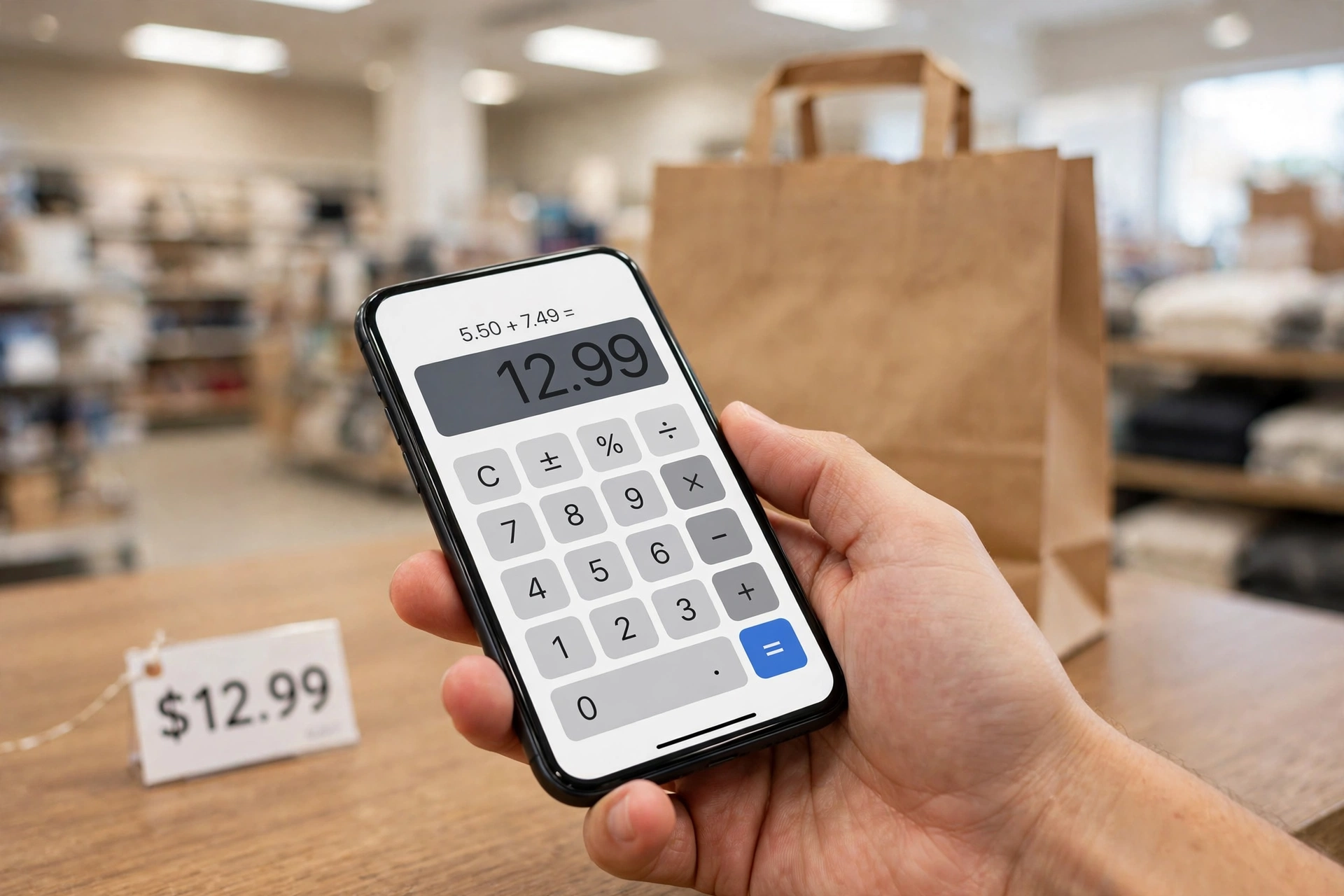
If you want a routine you can use anywhere — in a store aisle, on your phone, on the back of a receipt — here’s the three-step version:
- Find your tax rate. This is the combined state and local rate where you’re buying, not just the state rate. We’ll cover how to find it below.
- Multiply the price by the rate. Turn the percentage into a decimal first (7.5% → 0.075), then multiply. That gives you the tax amount.
- Add the tax to the price. The result is the total you’ll actually pay at the register.
And honestly, if you’re doing this more than once, skip the phone calculator and use SavyTools’ free Sales Tax Calculator. Type in the price, pick your state, and it shows the tax amount and the total right away. No sign-up, no app to install.
What Is the Sales Tax Rate in My State?
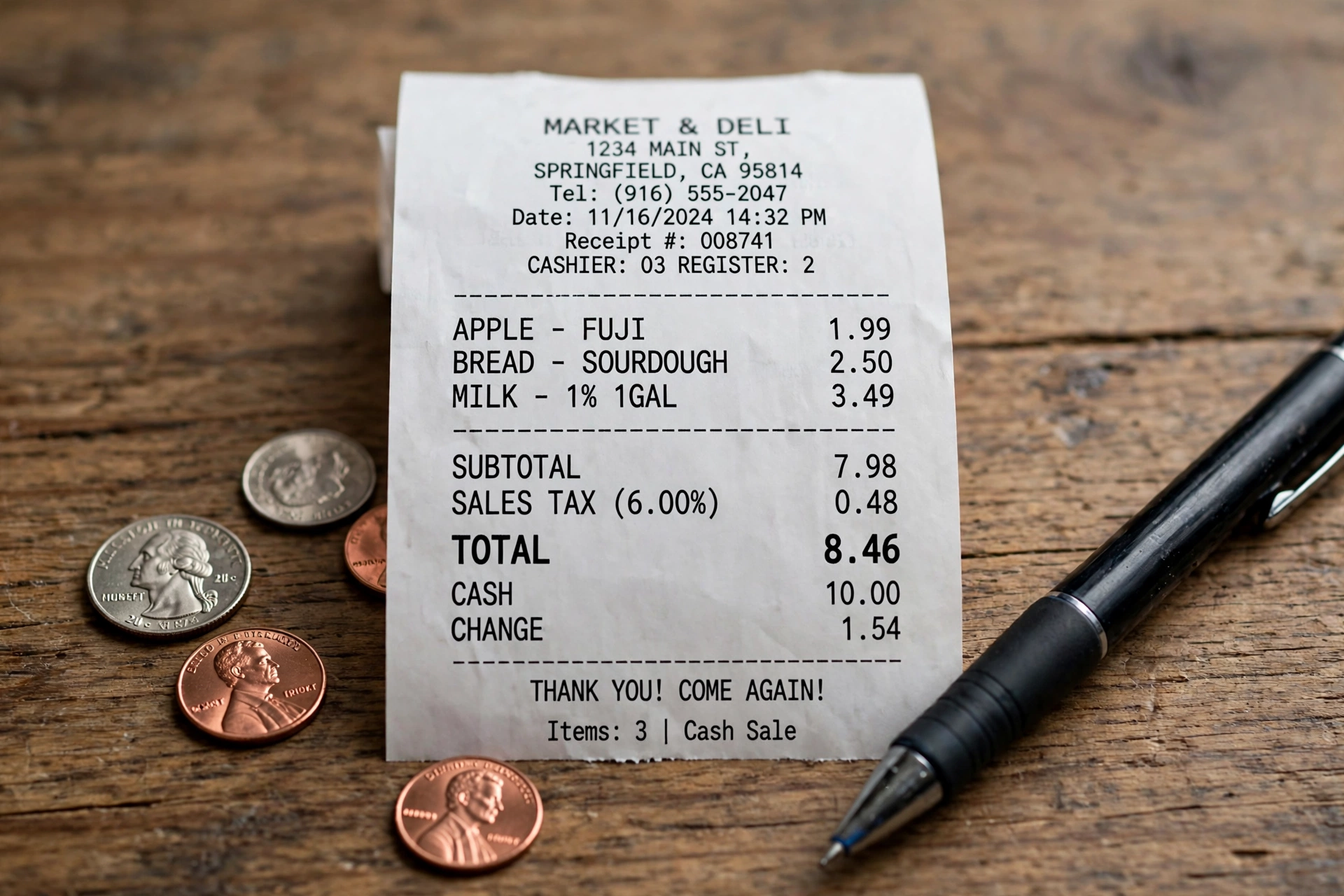
There is no single US sales tax rate. What you actually pay is usually a combined rate: the state rate plus whatever your city, county, or special district adds on top.
Here’s the lay of the land for 2026, based on the Tax Foundation’s midyear figures:
- Five states have no statewide sales tax: Alaska, Delaware, Montana, New Hampshire, and Oregon. (Alaska still allows local taxes.)
- California has the highest state-level rate (7.25%); Colorado has the lowest non-zero one (2.9%).
- Louisiana has the highest average combined rate at about 10.13%, followed by Tennessee (9.61%) and Washington (9.57%).
- The nationwide average combined rate is around 7.53%.
But averages hide the real story: two shoppers in the same state can pay different rates because local taxes vary by city and county. New York’s state rate is 4%, but New York City’s combined rate is 8.875%. Texas charges 6.25% at the state level, yet most Texans pay around 8.25% once local taxes are added.
So how do you find your rate? Check a recent receipt, or look it up for your ZIP code. The Tax Foundation keeps a full state-by-state table of 2026 sales tax rates. And remember, our calculator uses your state’s rate — if your city adds a local tax on top, your receipt total may be slightly higher.
How to Calculate Sales Tax on a Purchase Before You Buy
Most of us do the math after we’ve already decided to buy something. The smarter move is doing it before — a $1,200 laptop at an 8% combined rate costs $96 extra in tax, and that’s real money.
A few situations where a quick calculation saves you from a nasty surprise:
- Big-ticket shopping. TVs, laptops, furniture, appliances — the tax on these can run into hundreds of dollars.
- Online orders. Since 2018, most online retailers collect sales tax based on where the order is delivered, not where the company is based — so that “free shipping” deal looks different once tax is added at checkout.
- Budgeting a project. Renovating a room? Add up your materials, then add tax on the whole lot.
Do You Pay Sales Tax on Groceries, Clothes, or Online Orders?
Not everything gets taxed, and the rules change from state to state:
Groceries: Many states exempt most grocery food from sales tax, or tax it at a lower rate. Illinois removed its 1% state tax on groceries at the start of 2026, though some local areas still charge their own. Prepared food, though — a hot deli sandwich, a restaurant meal — is usually taxed.
Clothing: Most states tax clothing like any other purchase. A few don’t: Pennsylvania exempts most clothing, and Minnesota and New Jersey exempt it entirely.
Online orders: Yes, in almost every state now. The seller collects tax based on your delivery address — an order shipped to California is taxed at California’s rate, even if the store is elsewhere.
Services: This one’s a patchwork. A haircut is taxed in some states and not in others, and digital goods like streaming subscriptions and ebooks are taxed in a growing number of states too. When something feels like it should be exempt, double-check — your state’s department of revenue website has the definitive list, and your receipt shows what was actually charged.
Common Sales Tax Mistakes to Avoid
These are the mistakes that come up again and again:
- Using only the state rate. The state rate is just the base layer. In most of the country, city and county taxes stack on top, sometimes nearly doubling the total rate. Always use the combined rate for your area.
- Forgetting tax when comparing prices. A $499 TV in one store versus $519 in another isn’t a $20 difference if the tax rates differ. Compare the out-the-door totals, not the tag prices.
- Assuming a “no sales tax” state means no tax. Delaware, Montana, New Hampshire, and Oregon genuinely have no statewide or local sales tax. Alaska is the exception: no state tax, but local governments can and do charge their own.
- Mixing up sales tax and income tax. Sales tax is charged on purchases; income tax is charged on what you earn. If you want to figure out what actually lands in your bank account each month, our guide on how to calculate your paycheck after tax covers that side of things.
Frequently Asked Questions
How do I calculate sales tax on a $100 purchase?
Multiply $100 by your combined tax rate as a decimal. At 7%, that’s $100 × 0.07 = $7.00 in tax, for a total of $107.00. At 8.25%, the tax is $8.25 and the total is $108.25. The formula is always the same: tax = price × rate, then add the tax to the price.
Which states have no sales tax?
Five states have no statewide sales tax: Alaska, Delaware, Montana, New Hampshire, and Oregon. Alaska is a partial exception because local governments there can charge their own sales tax. The other four have no state or local sales tax at all.
How do I find the sales tax rate for my city?
Look at a recent receipt from a local store — the rate is usually printed next to the tax line. You can also check your state revenue department’s website or the Tax Foundation’s state-by-state table. Your total rate is the state rate plus any city and county taxes.
Sales tax isn’t complicated once you see the pattern — it’s just a percentage added to the price, and the only real variable is the rate where you happen to be standing. Learn the formula, check your local rate once, and you’ll never be surprised at the register again. And for the days when you’d rather not do the math, the free Sales Tax Calculator on SavyTools does it in seconds.
